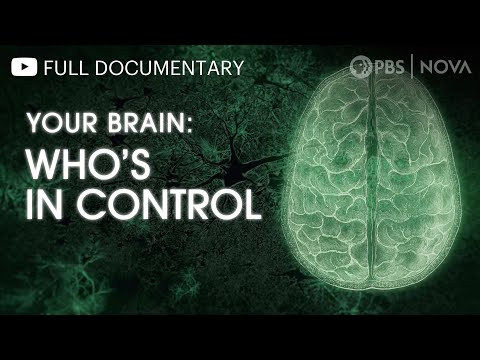
Your Brain: Who's in Control? | Full Documentary | NOVA | PBS
NOVA PBS Official
Summary
Our subjective sense of agency and a unitary self is largely an illusion generated by a complex interplay of conscious and predominantly unconscious brain processes, heavily influenced by our environment, social interactions, and even ancestral experiences.
Key Takeaways
- Unconscious Dominance: A significant portion of our brain's activity and decision-making occurs outside conscious awareness, shaping our personality and actions without our explicit knowledge. 0:16
- Unified Self Illusion: Our brain creates the illusion of a single, unified "self" or identity, but this feeling of unity is distributed across nearly 90 billion neurons and composed of many distinct, often independently operating, brain parts, as seen in split-brain patients. 1:05
- Consciousness as Communication: Consciousness is not localized to one brain area but emerges from the integrated communication and dynamic activity across multiple brain regions; disrupting this communication (e.g., via anesthesia) can lead to unconsciousness. 14:00
- Fragile Agency: Our subjective sense of control or "agency" over our actions is a fragile perception, which can be manipulated, and is often a retrospective interpretation by the brain after a movement has been initiated. 41:27
- External Influences on Brain: The brain is constantly influenced by external factors, including social interactions, the expectations of others, and even ancestral traumatic experiences, which can epigenetically alter brain biology across generations. 33:44
- Emotions Guide Decisions: Emotions, processed by areas like the insula (thermometer) and prefrontal cortex (thermostat), play a crucial role in guiding decisions, often leading to more cooperative and "better" outcomes by signaling potential harm or benefit. 28:50
- Optimal Creativity Requires Letting Go: For highly practiced skills and creative endeavors like improvisation, conscious self-monitoring and overthinking, often associated with the prefrontal cortex, can hinder performance; letting go of deliberate control can enhance creativity. 48:03