
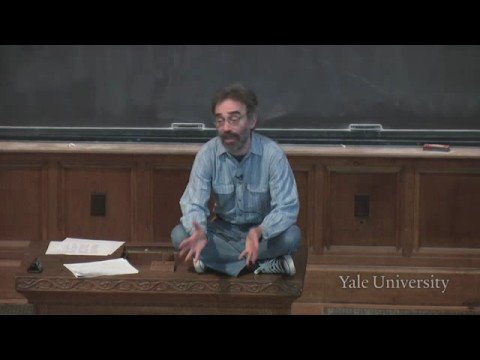
23. How to live given the certainty of death
YaleCourses
Summary
This lecture explores philosophical approaches to living a valuable life in the face of mortality, examining strategies for maximizing life's worth and considering the balance between duration, quality, and lasting accomplishments.
Key Takeaways
- Gratitude for Existence: Despite the common fear, death can evoke gratitude for having lived at all, recognizing the sheer luck of existence, and prompting the question of how to live in light of our mortality. 1:26
- The Imperative of Care: Mortality necessitates a distinct kind of "care" because our finite lifespan offers limited "do-overs" for correcting choices in aims or execution, especially given the world's richness and the complexity of achieving valuable goals. 7:17
- Diverse Life Strategies: Individuals can either adopt a "small potatoes" approach, prioritizing easily achievable pleasures with high success rates (e.g., "Eat, drink, and be merry"), or a "large potatoes" strategy, pursuing highly valuable but risky accomplishments (e.g., writing a novel, raising a family). 14:52
- Prioritizing Quality: While both the duration and perceived value (quantity) of life are important, a shorter life with significant "peaks" or high-quality experiences can be preferable to a very long life of minimal value, suggesting that quality can "trump" sheer quantity. 27:37
- Legacy as Semi-Immortality: Beyond literal continuation through offspring or recycled atoms (which the speaker finds unconvincing), many are drawn to a "semi-immortality" achieved through lasting accomplishments like creative works, scientific contributions, or raising a family. 38:00
- Embracing Life's Value: The prevailing "Western outlook" suggests that since life is inherently good, the appropriate response to mortality is to maximize its value and richness, rejecting philosophies (like some "Eastern outlooks" such as Buddhism) that advocate minimizing loss by viewing life as suffering. 46:07


