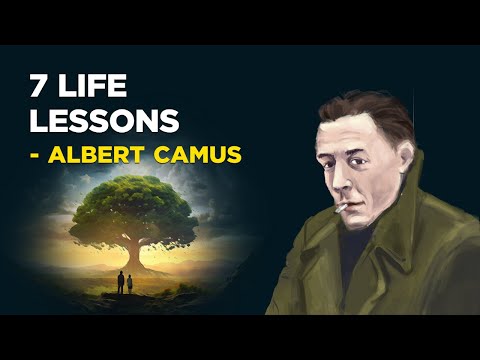
The Genius Philosophy of Albert Camus
Fiction Beast
Summary
Albert Camus's philosophy of absurdism suggests that despite life's inherent meaninglessness and contradictions, humans can achieve happiness and fulfillment by actively embracing its struggles, connecting with others, creating, and rebelling against injustice rather than seeking external purpose.
Key Takeaways
- Question Existence: Camus's experience as a "stranger" in various cultural contexts provided him a unique perspective to question human existence, prompting reflection on what it means to be human and seek meaning. 33:08
- Seek Community: Camus, after his football career was cut short by illness, found deep fulfillment in belonging to something larger than himself, like a team or theatre group, emphasizing the strong human desire for shared purpose and camaraderie. 34:46
- Create Art & Craft: In the absence of inherent meaning, Camus believed that humans must create something, finding profound purpose and soul nourishment in artistic creation and skilled craftsmanship, considering living itself an art form. 37:03
- Embrace Life's Randomness & Death: Camus's philosophy urges acceptance of life's inherent unfairness, random miseries, and the certainty of death, asserting that truly accepting death liberates one to live fully and find happiness. 41:29
- Confront Painful Truths: Rejecting religious comfort or blissful ignorance, Camus advocated for facing the "cold hard truth" of life's meaninglessness directly, believing knowledge is liberating and necessary to build genuine solutions. 40:08
- Find Joy in the Present: Illustrated by Mersault's character in The Stranger, Camus highlights that life is primarily experienced in the "here and now," and happiness can be found in simple present moments, even amidst dire circumstances like imprisonment. 43:19
- Rise in Crisis: Crises, as depicted in The Plague, reveal a deeper human connection and courage, prompting individuals to transcend selfishness and act with altruism and self-sacrifice, thereby finding a greater purpose beyond individual happiness. 45:03
- Active Rebellion & Joy in Struggle: Camus's ultimate conclusion is that happiness doesn't come from an easy life, but from accepting life's inherent struggles and contradictions, combined with an active, rebellious spirit against injustice, finding joy in the process of pushing boundaries itself. 50:32