
Summary
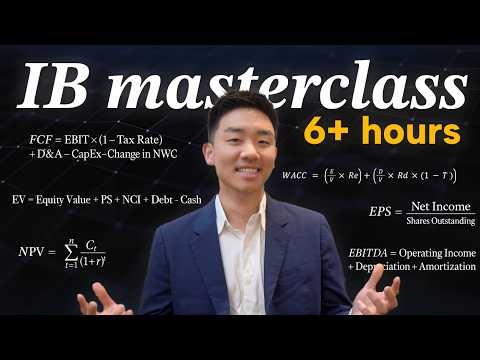
This masterclass provides a comprehensive, multi-hour guide to breaking into investment banking, covering the entire recruiting process from networking and behavioral interviews to foundational technical concepts like accounting, valuation, and discounted cash flow analysis, all from the perspective of a former JPMorgan banker and recruiting captain.
Key Takeaways
- Comprehensive Recruiting Pillars: The investment banking recruiting process is simplified into three core components: networking, behaviorals, and technicals, which candidates must master. 1:07
- Three Types of Banks & Key Differences: Bulge bracket banks (e.g., Goldman, JPM) offer broad services and global reach; elite boutiques (e.g., Evercore, Centerview) specialize in M&A with higher pay and more technical interviews; middle market banks target smaller deals. 17:23
- Lucrative Compensation Potential: First-year analyst compensation ranges from $140-185K at bulge bracket banks to $175-200K at elite boutiques, with associate-level compensation potentially reaching $1 million in strong years at top boutiques. 23:15
- Bankers Seek Technical Skill, Reliability, and Personability: Candidates must demonstrate strong financial knowledge, be dependable (e.g., timely email responses, good GPA, strong work ethic), and be personable ("airport test" – someone interviewers would enjoy spending time with). 42:09
- Networking Strategy is Funnel-Based: Prioritize warm leads (friends, alumni, family) before attending company events, then cold emailing/LinkedIn messaging alumni from your school, and finally cold messaging other bankers as a last resort, always sending personalized messages. 1:43:00
- Behavioral Answers Must Be Unique and Concise: Avoid generic responses; instead, tell unique, specific stories (under 60-90 seconds) from your personal life, sports, or hobbies, which showcase qualities like grit, humility, and problem-solving, rather than relying on common student group project anecdotes. 2:22:33
- Master Foundational Technicals: Core technical areas include understanding the three financial statements (income statement, cash flow statement, balance sheet), the differences between equity and enterprise value, and the three primary valuation methodologies: trading comps, transaction comps, and discounted cash flow (DCF). 3:06:03
- DCF is the Most Crucial Technical Topic: The DCF is an intrinsic valuation method based on the time value of money, requiring projection of unlevered free cash flows, calculation of a weighted average cost of capital (WACC), terminal value (perpetuity growth or exit multiple methods), and then discounting all future cash flows back to present value. 5:32:19
- Take Action Immediately: The most critical step is to apply the learned knowledge, start networking, refine behavioral answers, and practice technical skills actively within 24 hours rather than just consuming the content. 7:16:35


