Summary
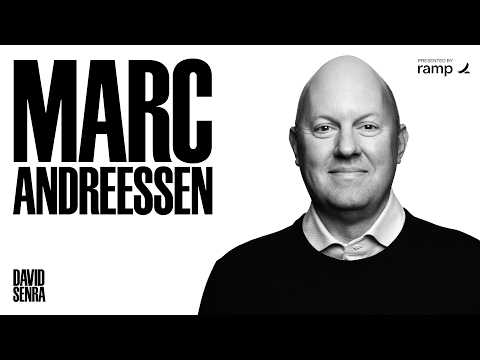
Marc Andreessen argues that societal and technological progress is primarily driven by founder-led companies and individuals with a forward-looking, anti-introspective mindset, who are willing to challenge established norms and scale their innovative visions against systemic stagnation.
Key Takeaways
- Minimize Introspection: Andreessen states he has "zero" introspection, believing dwelling on the past gets people stuck. He observes that many highly successful entrepreneurs, like Sam Walton, operate with similarly low levels of self-reflection, focusing instead on moving forward. 1:03
- Introspection as a Modern Construct: The modern concepts of introspection and therapy are argued to be relatively new, originating in the 1910s-1920s with figures like Freud, which shifted focus inward and encouraged self-criticism, a departure from how "great men of history" operated. 1:36
- Psychedelics & Entrepreneurial Drive: Andreessen notes a trend in Silicon Valley where entrepreneurs using psychedelics achieve a state of peace but often subsequently quit their companies, suggesting that their intense drive may stem from underlying insecurities or neurotic impulses that become "satisfied." 3:59
- Founder-Led vs. Managerialism: Throughout history, charismatic "will of power" founders built great things. The concept of "managerialism," emerging from the 1880s-1920s, introduced the idea of interchangeable managers to run large systems. However, managers typically struggle to adapt to change, which is crucial in dynamic environments. 13:14
- A16Z's Core Thesis: Andreessen Horowitz's core thesis is that in the 21st century, it is more effective to back a founder and train them on management skills than to start with a manager and try to train them to innovate. This approach is becoming increasingly vital as established institutions, often run by managers, struggle to adapt and are in a state of "fundamental collapse." 17:14
- The "Barbell" Industry Structure: A16Z predicted (and observed across industries like private equity, hedge funds, and investment banking) a shift where the "middle" tier of firms collapses, leading to a "barbell" structure with highly specialized, agile early-stage investors on one side and large, scaled platforms with extensive resources on the other. 27:17
- Elon Musk's Management Paradigm: Elon Musk's method of management is characterized by an extreme focus on substance, directly engaging with engineers to identify and fix critical production bottlenecks weekly, and demanding ultra-competence. This approach results in an unparalleled speed of operation and significantly outperforms traditional methods. 1:32:04
- The "Millet Elon" Metric: To quantify entrepreneurial capability, Andreessen jokingly proposes a metric called "millet Elon," representing how many "millions" of Elon Musk's unique blend of invention and scale a founder possesses, highlighting the challenge of replicating such a rare combination of skills. 1:42:58