
Summary
William Ackman demystifies finance through a lemonade stand analogy, emphasizing the power of compounding, the critical importance of avoiding permanent loss of capital, and key criteria for identifying high-quality, long-term investments.
Key Takeaways
- Forming a Business: To start a business, form a corporation, issue stock to raise equity from investors, and consider borrowing money (debt) to keep a larger percentage of future profits for founders, understanding that debt providers take less risk and thus earn a lower return than equity holders. 1:13
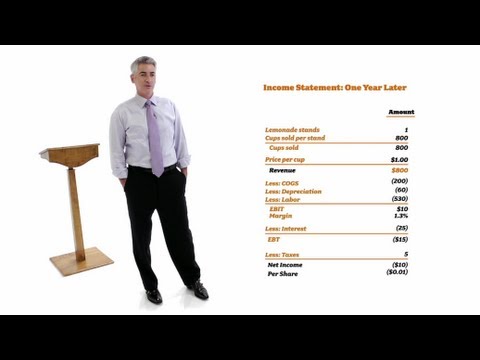
- Financial Statements: A balance sheet shows assets (cash, fixed assets, inventory, goodwill), liabilities (debt), and shareholder equity, while an income statement details revenues, expenses, and profitability over a period, and a cash flow statement tracks how cash moves through the business. 2:23
- Debt vs. Equity Risk: Debt is generally a safer investment because lenders have a senior claim on a company's assets and a fixed return, while equity investors take on higher risk (potential for total loss) but have the opportunity for significantly higher returns as residual claimants of the business's growth. 10:45
- Define Investment Risk: The most important risk to focus on in investing is the chance of a permanent loss of capital, not short-term price fluctuations or daily stock market movements. 13:07
- Power of Compounding: Start investing early to maximize the exponential growth of money through compound interest; for example, $10,000 invested at age 22 at a 10% annual return could grow to $600,000 in 43 years, significantly more than if started later. 25:11
- Avoid Losses: Warren Buffett's "Rule #1 of investing is never lose money, and rule #2 is never forget rule #1" highlights that avoiding significant losses is more critical than consistently chasing the highest returns, as losses severely diminish compounding effects. 27:57
- Individual Investor Criteria: For successful long-term investing, focus on public, established companies that you understand, purchased at a reasonable price, and which you could theoretically own forever, characterized by unique products/services, brand loyalty, low debt, strong barriers to entry, immunity to extrinsic factors, and low capital intensity. 29:16
- Personal Financial Preparation: Before investing in the stock market, pay off high-interest debt (especially credit cards), and establish an emergency fund sufficient for 6-12 months of living expenses, ensuring financial comfort to withstand market volatility. 39:31
- Psychology of Investing: Successful investing requires discipline to counteract natural human tendencies; be a buyer when others are selling (in busts) and a seller when others are buying (in bubbles), and prepare to endure market volatility by being financially secure and confident in your research. 41:05
- Evaluating Fund Managers: When outsourcing investments, choose managers with an understandable strategy, a reputation for integrity, a value-investing approach, a long-term (5-15+ years) consistent track record, and critically, who invest a substantial majority of their own money alongside yours to align interests. 44:32


