
Lecture: 2017 Maps of Meaning 01: Context and Background
Jordan B Peterson
Summary
Jordan Peterson introduces his "Maps of Meaning" theory, asserting that human societies are structured by value-laden narratives that enable individuals to find meaning and navigate existence between inevitable order and chaos, in a world fundamentally characterized by inequality and suffering.
Key Takeaways
- Inevitable Inequality: All societal systems, regardless of political structure, naturally produce vast disparities in wealth and success, explainable by the Pareto distribution, where a small minority accumulates a disproportionate amount while many have little, a phenomenon observed across various human endeavors and in every society studied. 10:10
- Functional Moral Systems: Human societies are necessarily nested within moral systems, often expressed through narrative dramas like religious stories or fairy tales, which serve as essential, implicitly understood guidelines for how to perceive the world and how to act, thereby maintaining social order and fulfilling fundamental motivational needs. 52:14 1:37:46
- Meaning from Responsibility: Meaning in life is directly proportionate to the adoption of responsibility; humans are akin to "beasts of burden" who need a "load," and a lack of externally scaffolded systems or meaningful responsibility leads to drifting, depression, and anxiety. 1:27:23 1:29:09
- Pain as Ultimate Reality: People's actions universally affirm that pain is the ultimate reality, a concept central to many religious traditions; human self-consciousness uniquely grasps finitude and suffering, making the cessation of unnecessary pain the most meaningful and coherent "medication" for life's existential burden. 1:30:39 1:33:41
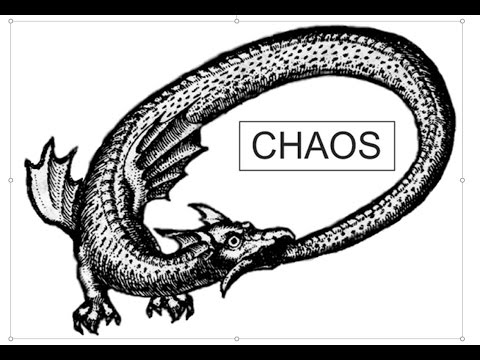
- The Heroic Traverse: The individual is akin to a "mythological hero," constantly traversing between "order" (explored, predictable territory where expectations match reality) and "chaos" (unexplored territory where things fall apart, as in moments of betrayal or when fundamental assumptions are disrupted). 2:04:27 2:03:08
- Articulating Life's Path: The "Future Authoring Program" (a course assignment) guides individuals to write an autobiography to understand their past and current self, and then to articulate a concrete plan for their desired future (3-5 years out), as specifying goals, even with the risk of failure, is crucial for generating positive emotion and achieving desired outcomes. 2:16:39 2:22:10
- Benefits of Self-Authorship: Research on the Future Authoring Program shows that university students who complete it are approximately 25% less likely to drop out and experience about a 20% increase in their grade point average, along with reported improvements in physical health by reducing overall stress load. 2:24:47 2:25:05
- Truth Beyond Science: Beyond scientific truth, there exists a "pragmatic truth" (the truths that enable survival and reproduction) and the "hyperreal" truth of great dramas and fiction, which distill profound human experiences and provide abstract, widely applicable guidelines for conduct in the world, addressing the fundamental question of "how you should conduct yourself in the world." 1:07:45 1:13:26 1:24:28


