Summary
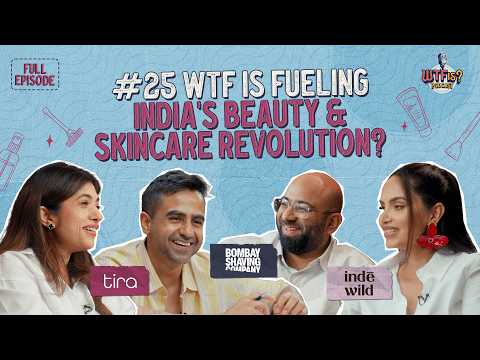
The Indian beauty and skincare market is experiencing explosive growth, outpacing global predictions, driven by a powerful shift towards premiumization, Gen Z's demand for authentic, ingredient-led products, and a burgeoning national pride in Indian heritage and traditional ingredients reimagined for modern consumers.
Key Takeaways
- Market Growth & Size: The Indian beauty and personal care (BPC) market reached $21 billion in 2024, surpassing earlier predictions for 2025, with beauty itself accounting for 40-45% of this. Skincare and fragrance are identified as the fastest-growing categories, with skincare contributing 20-25% and color cosmetics (makeup) 25-30% of the beauty market, while hair care is a $7.8 billion market, predominantly oil-based. 3:00:00
- Premiumization Trend: There's a strong trend of premiumization across all price points. Products are categorized: mass (below ₹1,000), mass-tige (₹700-₹1,000), premium (₹1,000-₹2,300), and prestige/luxury (over ₹2,300-₹2,500). The premium to prestige segment is growing the fastest, driven by increasing disposable income, especially among young women entering the workforce, and expanding access in Tier 2/3 cities. 2:48:43
- Shift to Indian Identity & Nostalgia: The market is moving beyond merely emulating Western beauty standards, with a growing nationalistic pride in Indian culture, heritage, and ingredients. Brands successfully tap into "re-imagined old" concepts, like Inde Wild's "chumpy" hair oil or ghee-based lip balms, making traditional practices cool and scientifically backed for the new Indian consumer. 3:59:59
- Gen Z Consumer Behavior: Gen Z demands salon-like experiences at home, seeking efficient, ingredient-led products (e.g., bond repair, peptides) and prioritizing self-expression. They rely on influencers and Key Opinion Leaders (KOLs) as experts over traditional trichologists or dermatologists, driving trends like "skin minimalism" and multi-purpose products. 31:31
- Community & Content as Core Strategy: For new brands, building an authentic community and creating compelling content are paramount. This involves starting small (e.g., events with 14 people), finding shared values with target audiences or creators, and leveraging platforms like TikTok (Perfume Talk, Skintalk) for organic reach and education. Brands are advised to think of themselves as both product and media companies. 48:07
- Fragrance Market Opportunity: The fragrance market has a significant "white space" between ₹1,000 and ₹10,000. Key trends include "perfume wardrobing" (different fragrances for different moods/occasions), layering scents, "clean fragrances" (avoiding endocrine disruptors like phthalates), and "gourmand" scents (food-inspired like vanilla, pistachio, jalebi). 53:00
- Global Sourcing & Innovation: Brands are leveraging global manufacturing expertise (e.g., Korea for texture/sensorials, Japan for eye creams) while incorporating Indian ingredients to create proprietary formulas, rather than being confined to local manufacturing, ensuring competitive product quality and innovation. 1:28:33
- Strategic Influencer Marketing & Sampling: For new brands, influencer marketing should start with micro and nano-influencers who align with brand values, providing unique, experience-driven PR boxes and offering potential brand ambassadorships. Sampling strategies, including selling mini-products (India is the "mini capital"), are crucial for driving trial and upselling. 1:38:15